
What happens when AI takes the easy customer conversations?
Can an AI really solve my problem, or do I need a human?
It’s a question more customers are asking themselves when interacting with AI. And from where I sit in Customer Operations, I think there is another side to that question that deserves just as much attention.
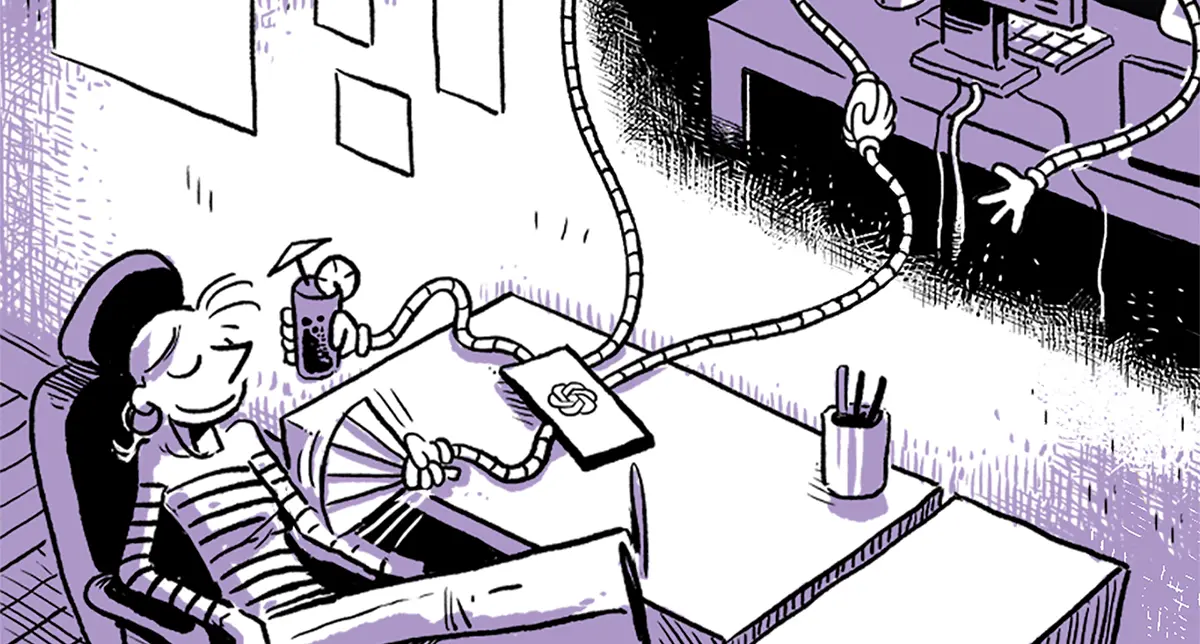
What happens to our contact center people when AI can handle more of the simple interactions?
I am convinced that the future of contact centers is not less human. In many ways, it will need to become more human than ever.
AI can take care of routine requests, give customers answers instantly and help our people access the right information much faster. That’s a real opportunity for customer experience.
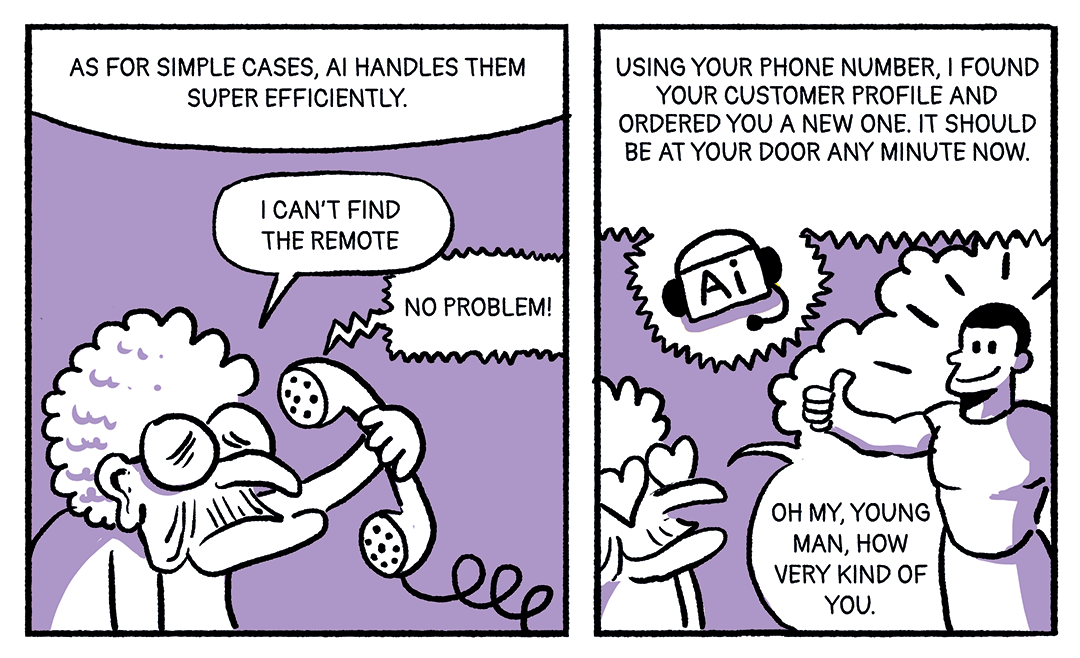
But it also means that the interactions routed to our people will increasingly be the ones that require judgment, creativity or simply a human connection.
And that changes the job fundamentally.
From specialist to problem solver
For years, customer service has relied heavily on specialized expertise. One team knows billing. Another knows connectivity. Another knows a specific product or process.
The consequence for customers is familiar: being transferred from one person to another until they reach someone who can solve their specific problem.
AI gives us an opportunity to rethink that model.
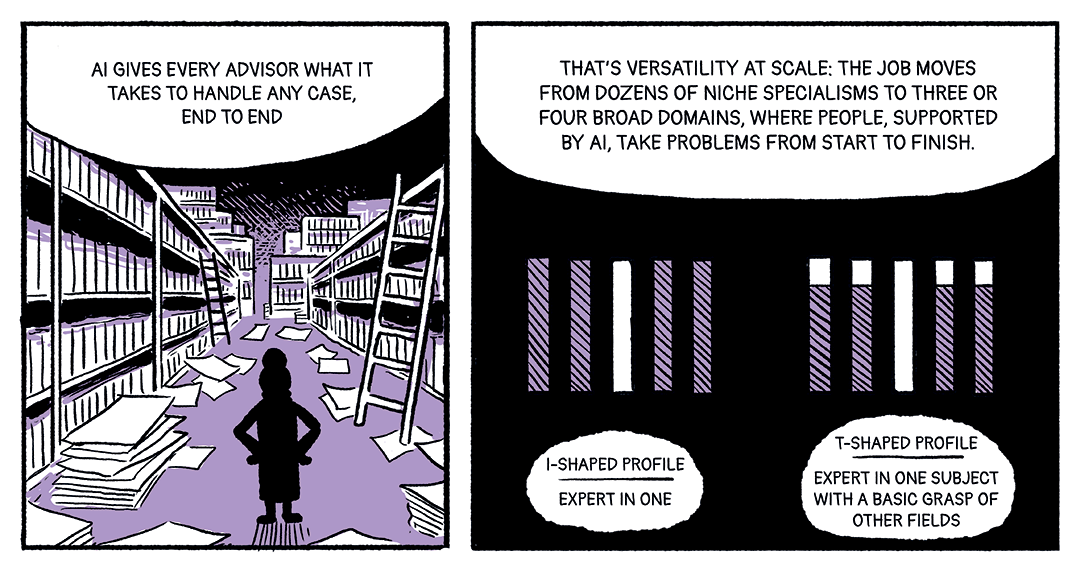
When an advisor can instantly access knowledge, procedures and contextual recommendations across several domains, their role becomes much broader. Instead of knowing everything about one narrow area, they can combine deep expertise in one domain with enough knowledge across several others to take ownership of a case from start to finish.
We are moving from I-shaped expertise to T-shaped expertise on a scale, with AI acting as an exoskeleton. Not replacing the advisor’s expertise but extending it: giving them access to the knowledge they need when they need it, so they can solve more customer questions themselves.
For customers, that can mean fewer transfers, less repetition and more issues resolved in one interaction.
And for me, that matters because customers don't care about organizational structures. They simply have a problem they want solved.
Can you help me now, or will I need to explain all of this again to someone else?
That is ultimately the experience we need to design for.
When AI knows the process, humans can focus on the person
There is another shift happening at the same time.
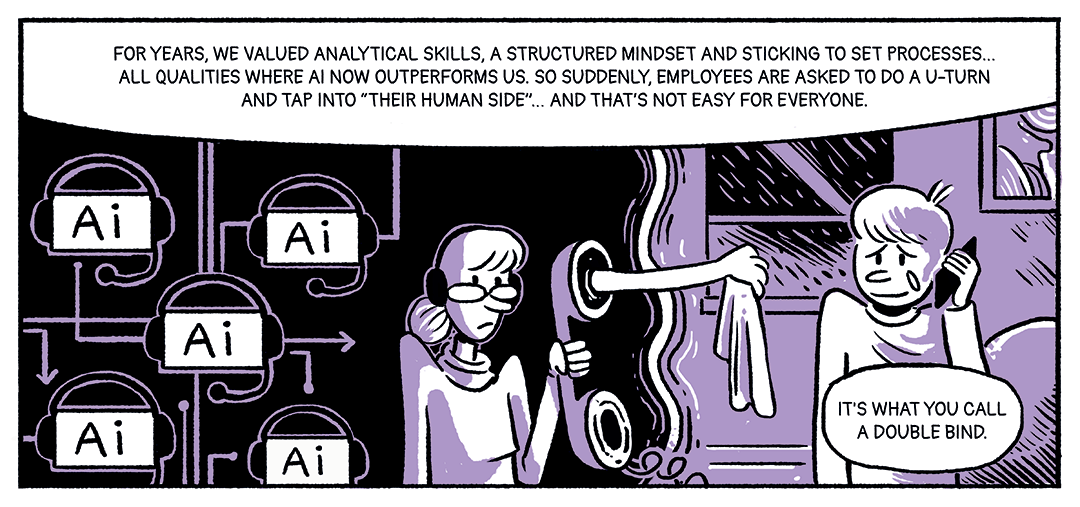
For decades, we trained and rewarded people for knowing procedures, remembering information and executing predefined tasks consistently.
AI is increasingly good at exactly those things, sometimes even better than humans.
So, what becomes more valuable on the human side?
Judgment. Context. The ability to understand what someone needs, even when they don't express it perfectly. Knowing when to follow a process and when a situation requires something more.
Can an AI really solve my problem, or do I need a human?
My answer would increasingly be it depends on the problem.
For a simple request, customers may prefer an immediate answer at 11 p.m. over waiting until the next morning to speak to someone. But when a situation becomes complex or ambiguous, human judgment becomes essential.
This is something I see very concretely in my role in leading Customer Operations.
A couple of weeks ago, I was sitting alongside a colleague in one of our contact centers when a customer called to reschedule a missed appointment.
The agent first looked at what had actually happened. The internet pack was ordered on the neighbour’s address because it was a new build. Simply replanning the appointment would only have brought the same issue again the next day.
That moment showed the difference between answering a question and understanding a customer.
Technology can help us tremendously with the first. Our people continue to make the difference with the second.
But there is a catch
There is one consequence of this transformation that I think we need to talk about much more.
Imagine AI becomes excellent at handling all the simple requests. Password resets. Basic questions. Straightforward changes. Routine troubleshooting.
Great for the customer.
But what does that leave for my colleagues?
Potentially, seven hours of complex, demanding interactions, one after another.
If AI changes the nature of customer contacts, we also need to rethink the nature of the job.
Tomorrow's contact center roles will therefore include much more than direct customer interactions: following complex cases, improving knowledge bases, validating AI-generated answers, identifying recurring customer pain points or helping redesign processes.
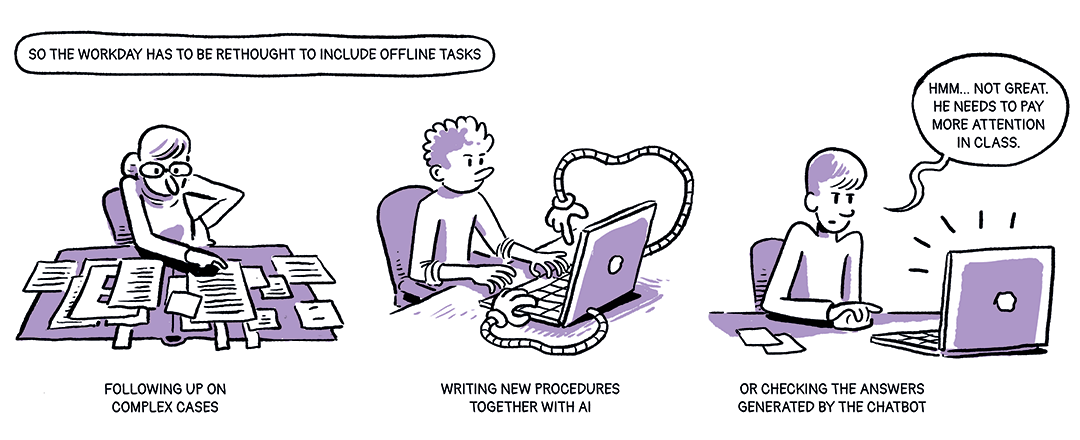
Our people don't simply work with AI. They also have an important role to play in making the AI better.
It requires us to redesign the work itself.
And what happens when customers contact us less?
There is an even bigger question behind all of this.
If most of my interactions are handled by AI, what relationship do I still have with my provider?
I find this question fascinating.
Today, a customer relationship is built through many interactions. Some are digital. Some happen over the phone. Others happen in a shop or through the products and services people use every day.
AI could make many of those interactions almost invisible.
In the future, customers might delegate certain interactions to their own AI assistants. Instead of a person contacting our systems, their AI could interact directly with ours.
What happens to the brand relationship then?
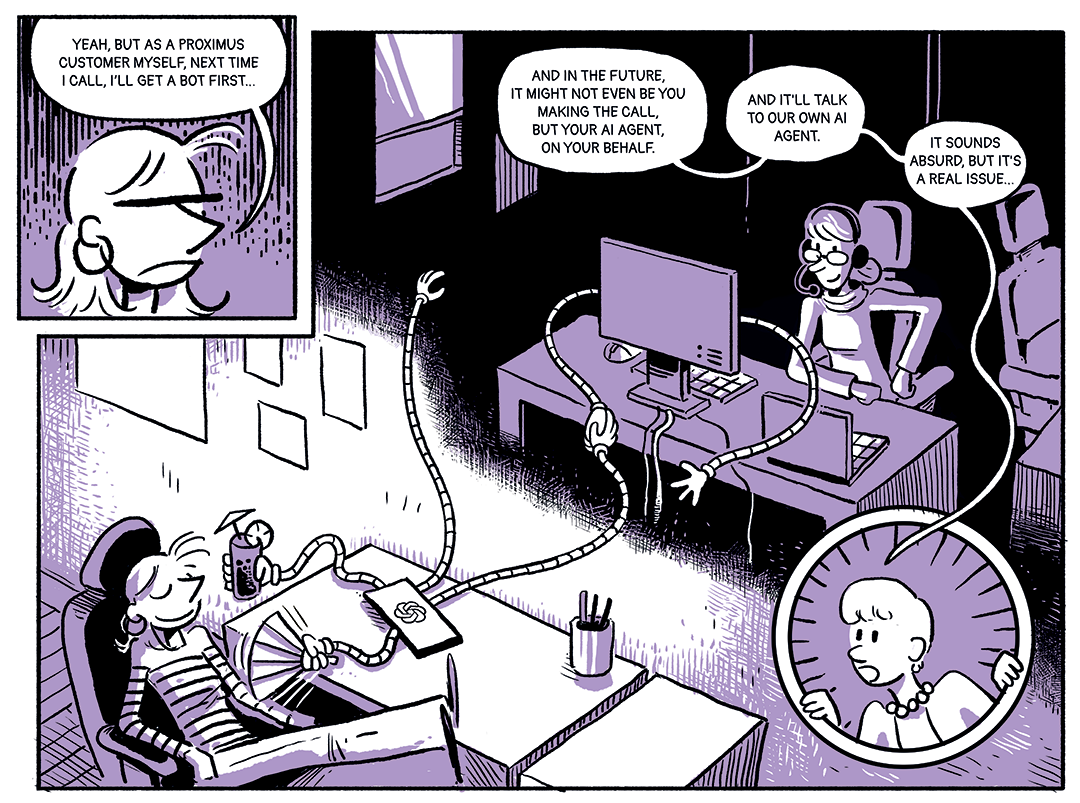
I don't think we have all the answers yet. But I am convinced that fewer human interactions will make the remaining ones more important, not less.
Reliability will matter. Trust will matter. And the moments when a person genuinely needs us will matter enormously.
AI when it helps. Human when it matters.
At the end of the day, the customer wants their issue solved effortlessly.
We should be asking ourselves:
How easily did we solve the customer's problem?
Did we use AI where it genuinely made the experience better?
Could the customer reach a person when a person was what they needed?
And just as importantly: are we giving our people the tools, skills and working environment they need to make those human moments count?
For me, that is where the future of Customer Service gets interesting.
AI can make service faster, more accessible and more consistent. But the ultimate ambition should be bigger than automation.
It should give our people more space to do what people do best: understand, judge and build trust.
Because the future of customer service won't be defined only by how good our AI becomes.
It will also be defined by how human we choose to remain.